
The Science Behind Smoke Detectors and Early Fire Detection
Fire accidents often begin with something that seems harmless—a small electrical fault, an overheated appliance, or unattended cooking. Within minutes, that small problem can fill a room with smoke and turn into a life-threatening emergency. In many cases, smoke spreads long before flames become visible, making early detection one of the most effective ways to reduce damage and save lives.
This is where smoke detectors and a reliable fire detection system play a critical role. They are designed to identify the earliest signs of fire, giving occupants enough time to evacuate and allowing emergency response teams to act before the situation worsens.
As commercial buildings, industrial facilities, hospitals, schools, and residential complexes across India continue to expand, understanding how smoke detectors work has become more important than ever. This guide explains the science behind smoke detectors, the different technologies available, and why early fire detection should be a priority for every building owner and facility manager.
Why Fire Safety System Maintenance Matters
Many people assume that flames are the biggest danger during a fire. In reality, smoke is often the greater threat.
Smoke contains toxic gases, reduces visibility, and spreads quickly through corridors, stairwells, and ventilation systems. According to global fire safety research, smoke inhalation is responsible for a significant number of fire-related fatalities.
A few extra minutes of warning can make a major difference. Early fire detection helps:
- Protect human life
- Reduce property damage
- Support faster evacuation
- Minimize business downtime
- Improve emergency response
That is why modern buildings invest in advanced fire alarms and intelligent detection technologies instead of relying only on manual inspection.
The Science Behind Smoke Detection
Smoke detectors are designed to recognize particles released during the early stages of combustion. Instead of waiting for visible flames, they identify changes in the surrounding air.
When smoke particles enter the sensing chamber inside the detector, they trigger an electronic response. This response activates the connected alarm system, alerting occupants and initiating emergency procedures.
Depending on the building design, the detector may also communicate with a centralized fire detection system, allowing security personnel to identify the exact location of the incident.
The technology works continuously, monitoring the environment every second without human intervention.
Also Read: The Future of Fire Detection: AI-Powered Smoke and Heat Sensors
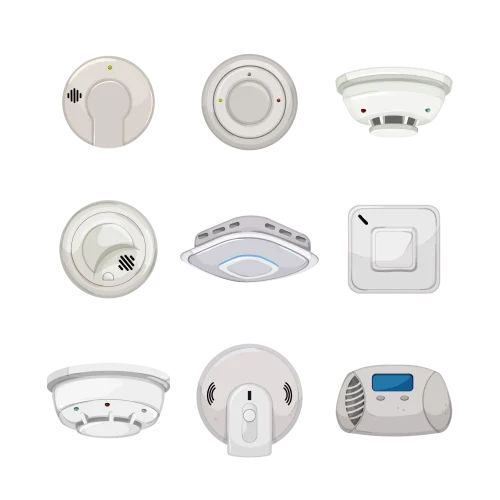
Types of Smoke Detectors
Different environments require different smoke detection technologies. Selecting the right detector depends on the type of fire risk, occupancy, and building usage.
Ionization Smoke Detectors
Ionization detectors are highly sensitive to fast-burning fires.
Inside the detector is a tiny chamber containing ionized air. When smoke enters the chamber, it interrupts the flow of electrical current. The detector immediately recognizes this change and activates the alarm.
These detectors respond quickly to fires involving:
- Paper
- Wood
- Flammable liquids
- Cooking oils
They are commonly installed in areas where rapid flame development is possible.
Also Read: The Role of Passive Fire Protection in High-Rise Buildings
Photoelectric Smoke Detectors
Photoelectric detectors use a beam of light inside the sensing chamber.
Normally, the light does not reach the sensor directly. When smoke particles enter the chamber, they scatter the light onto the sensor, triggering the alarm.
This technology performs especially well during slow, smoldering fires such as those involving:
- Upholstered furniture
- Electrical wiring
- Mattresses
- Office equipment
Because many fires begin by smoldering before flames appear, photoelectric detectors are widely recommended for offices, hotels, hospitals, and residential buildings.
Dual-Sensor Smoke Detectors
Many modern buildings use dual-sensor detectors.
These combine ionization and photoelectric technologies into a single unit, allowing them to detect both fast-flaming and slow-smoldering fires.
The result is broader protection with fewer detection gaps.
Intelligent Smoke Detection Systems
Today’s commercial buildings increasingly rely on addressable and intelligent smoke detection systems.
Unlike conventional detectors that simply activate an alarm, intelligent systems can:
- Identify the exact detector location
- Monitor detector health
- Reduce false alarms
- Provide maintenance alerts
- Connect with centralized monitoring software
This allows building operators and safety officers to respond more efficiently during emergencies.
How Smoke Detectors Work with Fire Alarm Systems
A smoke detector is only one component of a complete fire safety network.
When connected to a modern fire alarms system, several automated actions can occur immediately after smoke detection.
These may include:
- Activating audible and visual alarms
- Sending alerts to the control room
- Releasing magnetic fire doors
- Shutting down HVAC systems
- Starting emergency evacuation announcements
- Notifying emergency services
In large commercial buildings, this coordinated response significantly improves occupant safety.
Integration with Active Fire Protection Systems
Early detection becomes even more effective when integrated with active fire protection equipment.
For example, after smoke detection, the building management system can activate:
- Fire sprinkler systems
- Automatic sprinkler systems
- Smoke exhaust systems
- Emergency ventilation controls
These systems help contain the fire before it spreads throughout the building.
Large industrial facilities may also integrate detection with fire suppression systems that use gas, foam, or clean agents depending on operational requirements.
The Role of Passive Fire Protection
Detection alone cannot stop a fire.
Buildings also require passive fire protection measures that slow fire and smoke movement.
Examples include:
- Fire-resistant walls
- Compartmentation
- Fire-resistant ceilings
- Smoke barriers
- Fire rated doors
These features provide valuable time for evacuation while emergency teams respond.
A well-designed building combines passive protection with active detection for maximum effectiveness.
Smoke Detection in Industrial Facilities
Factories, warehouses, manufacturing plants, and logistics centers present unique fire risks.
Potential hazards include:
- Electrical equipment
- Chemical storage
- Combustible materials
- Packaging
- Heavy machinery
Because these environments often operate around the clock, continuous monitoring becomes essential.
Modern industrial facilities use advanced smoke detection technologies along with:
- Heat detectors
- Flame detectors
- Gas detection systems
- Aspirating smoke detection systems
These solutions provide earlier warnings in high-risk environments where conventional detectors may not perform effectively.
Common Causes of False Alarms
While smoke detectors are highly reliable, false alarms can occur if systems are poorly maintained.
Common causes include:
- Dust accumulation
- Steam from kitchens
- Construction activities
- Insects inside detectors
- Incorrect detector placement
- Lack of regular maintenance
Routine inspection and testing help reduce unnecessary alarms while maintaining system performance.
Maintenance Is Just as Important as Installation
Installing smoke detectors is only the first step.
Regular maintenance ensures they continue working when needed most.
Best practices include:
- Monthly functional testing
- Battery replacement where applicable
- Cleaning sensing chambers
- Annual professional inspection
- System calibration
- Replacing aging detectors according to manufacturer recommendations
Building owners should also maintain inspection records for regulatory compliance and insurance requirements.
Choosing the Right Smoke Detection Solution
Every building has different fire protection needs.
Factors to consider include:
- Building size
- Occupancy type
- Ceiling height
- Airflow conditions
- Environmental dust levels
- Industry regulations
- Fire load
Professional fire safety consultants evaluate these factors before recommending suitable smoke detection technologies.
A customized solution provides better protection than a one-size-fits-all approach.
Fire Safety Trends in India
India’s commercial and industrial sectors are rapidly adopting smart fire safety technologies.
New developments include:
- AI-assisted fire monitoring
- IoT-enabled smoke detectors
- Cloud-based fire alarm management
- Wireless detection systems
- Predictive maintenance
- Remote monitoring platforms
These innovations improve reliability while helping organizations manage large facilities more efficiently.
As fire safety regulations continue to evolve, businesses are investing in smarter systems that provide both compliance and operational advantages.
Learning About the Latest Fire Detection Technologies
The fire protection industry continues to innovate every year. New smoke detection technologies, intelligent monitoring platforms, and integrated building safety solutions are regularly introduced by leading manufacturers.
For professionals looking to stay updated, industry exhibitions offer valuable opportunities to compare technologies, attend technical sessions, and interact directly with solution providers.
Events such as Fire & Security India Expo 2026 bring together manufacturers, distributors, consultants, system integrators, and fire safety experts under one roof. These events help facility managers, engineers, architects, and safety officers understand emerging trends in smoke detection, fire alarms, and integrated building safety systems while exploring solutions designed for the Indian market.
Conclusion
Smoke detectors may appear to be simple devices, but the science behind them is sophisticated and highly effective. By identifying smoke during the earliest stages of combustion, they provide critical time for evacuation, emergency response, and fire suppression.
When integrated with a comprehensive fire detection system, supported by fire alarms, fire sprinkler systems, and strong passive fire protection, smoke detectors become one of the most valuable investments in building safety.
Whether protecting homes, offices, hospitals, factories, or commercial complexes, early fire detection remains the foundation of modern fire protection. As India continues to invest in safer infrastructure and smarter buildings, adopting reliable smoke detection technology is no longer optional—it is an essential part of responsible facility management and life safety.