Fire Safety Responsibilities of Facility Managers in Commercial Buildings
Commercial buildings are busy environments where hundreds or even thousands of people work, visit, and interact every day. Offices, shopping malls, hospitals, hotels, educational institutions, warehouses, and industrial facilities all face different fire risks. Managing these risks is one of the most important responsibilities of facility managers.
A facility manager is responsible for ensuring that a building remains safe, compliant, and prepared for emergencies. Fire safety is not limited to installing equipment. It requires continuous planning, inspections, employee training, maintenance, and coordination with emergency response teams.
As India’s commercial infrastructure continues to grow, facility managers must adopt modern fire safety practices while complying with national and local regulations. A proactive approach helps protect lives, reduce property damage, minimize business disruptions, and maintain legal compliance.
Why Fire Safety Is a Core Responsibility
Fire emergencies can occur due to electrical faults, overloaded circuits, combustible materials, equipment failures, kitchen accidents, or human negligence. Even a small fire can spread rapidly if safety systems fail or emergency procedures are not followed.
Facility managers play a central role in reducing these risks. Their responsibilities include identifying hazards, maintaining safety equipment, organizing emergency drills, and ensuring every occupant understands evacuation procedures.
Strong fire safety management also protects business continuity. A well-prepared building can recover faster after an incident while reducing financial losses and reputational damage.
Conduct Regular Fire Risk Assessments
Every commercial property has unique fire hazards. A facility manager should regularly assess potential risks across the building.
During inspections, attention should be given to:
- Electrical panels and wiring
- Storage areas containing combustible materials
- Server rooms and data centers
- HVAC systems
- Kitchens and cafeterias
- Chemical storage rooms
- Parking areas
- Generator rooms
Risk assessments should identify hazards, evaluate their severity, and recommend corrective actions. These inspections should be documented and updated whenever building layouts, equipment, or occupancy change.
A structured assessment helps prioritize safety improvements before incidents occur.
Maintain Fire Detection Systems
Early detection saves lives. A reliable fire detection system provides occupants with valuable time to evacuate safely before flames spread.
Facility managers should ensure that all detection devices remain fully operational throughout the year.
Key components include:
- Smoke detectors
- Heat detectors
- Manual call points
- Control panels
- Audible and visual alarms
Routine testing should verify that every detector responds correctly and communicates with the central control panel. Batteries, sensors, and wiring should also be inspected according to manufacturer recommendations.
Ignoring maintenance can result in delayed detection during an actual emergency.
Also Read: The Role of Passive Fire Protection in High-Rise Buildings
Keep Fire Alarms Fully Operational
Functional fire alarms are critical during emergencies. Occupants must receive immediate warning whenever smoke or fire is detected.
Facility managers should verify:
- Alarm audibility across all floors
- Emergency notification systems
- Backup power supplies
- Automatic notification to monitoring stations where applicable
- Integration with emergency evacuation systems
Regular alarm testing helps identify faulty devices before they become a safety concern.
Employees should also understand what different alarm signals mean and how to respond without delay.
Inspect Fire Suppression Systems
Detecting a fire is only the first step. Commercial buildings also require effective fire suppression systems to control or extinguish fires before they spread.
Depending on building occupancy, suppression solutions may include:
- Gas suppression systems
- Foam suppression systems
- Clean agent systems
- Kitchen suppression systems
- Water-based suppression technologies
Facility managers should schedule inspections, testing, and servicing according to applicable standards.
Any damaged valves, discharged cylinders, blocked nozzles, or pressure loss should be addressed immediately.
Ensure Fire Sprinkler Systems Are Ready
Modern commercial buildings rely heavily on fire sprinkler systems for automatic fire control.
Sprinklers activate when temperatures rise beyond safe levels, helping reduce fire growth until emergency responders arrive.
Facility managers should inspect:
- Sprinkler heads
- Water pressure
- Pipe condition
- Control valves
- Pump operation
- Water storage tanks
Blocked sprinkler heads, corrosion, or accidental damage can reduce system effectiveness. Routine maintenance ensures reliable performance during emergencies.
Many facilities also use automatic sprinkler systems as part of their overall fire protection strategy, especially in warehouses, retail spaces, and manufacturing units.
Maintain the Fire Hydrant System
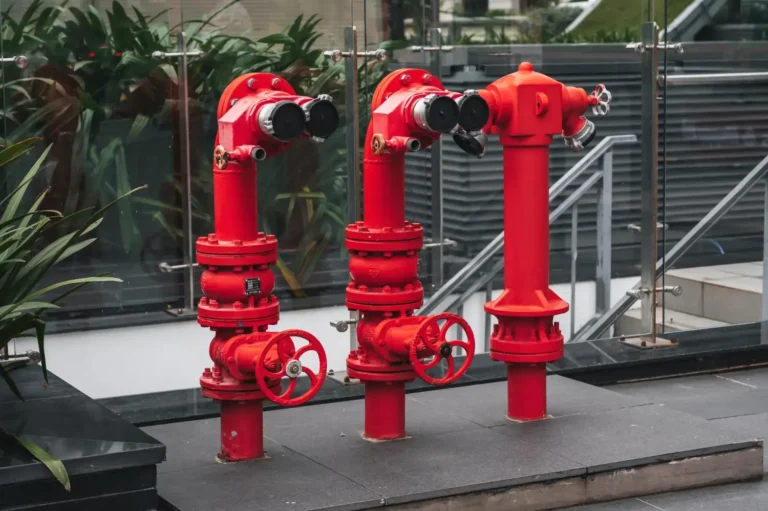
The fire hydrant system supplies water for firefighting operations. It is essential for both in-house emergency response teams and local fire departments.
Routine inspections should verify:
- Hydrant accessibility
- Hose condition
- Valve operation
- Water pressure
- Pump functionality
- Hydrant markings
Vehicles, storage materials, or construction equipment should never block hydrant access.
A hydrant that cannot deliver sufficient water during an emergency can significantly increase fire damage.
Strengthen Passive Fire Protection
Many people focus only on firefighting equipment, but passive fire protection is equally important.
Passive protection slows the spread of fire and smoke without requiring human intervention.
Facility managers should regularly inspect:
- Fire-resistant walls
- Fire-rated ceilings
- Fire-resistant partitions
- Fire stopping around cable penetrations
- Compartmentation barriers
- Emergency exits
Proper maintenance of passive systems allows occupants additional time to evacuate safely.
Inspect Fire Rated Doors
Fire rated doors help contain smoke and flames by isolating affected areas.
These doors should never be wedged open or blocked.
Facility managers should inspect:
- Door closers
- Hinges
- Seals
- Latching mechanisms
- Surface damage
- Certification labels
Even minor damage can reduce the effectiveness of fire-rated doors during an emergency.
Routine inspections ensure these barriers perform as intended.
Keep Emergency Exits Clear
Emergency evacuation depends on clear escape routes.
Facility managers must ensure:
- Exit doors remain unlocked during occupancy.
- Corridors stay free of obstacles.
- Exit signs remain illuminated.
- Emergency lighting functions during power failures.
- Stairwells remain accessible.
Employees should always know the nearest emergency exit from their work area.
Simple housekeeping practices often prevent serious evacuation delays.
Train Employees Regularly
Fire safety equipment alone cannot prevent injuries if occupants do not know how to respond.
Facility managers should organize regular training sessions covering:
- Fire prevention practices
- Alarm response procedures
- Evacuation routes
- Assembly points
- Fire extinguisher awareness
- Emergency reporting procedures
New employees should receive fire safety orientation during onboarding.
Refresher training keeps everyone prepared for unexpected situations.
Conduct Fire Drills
Fire drills help identify weaknesses in emergency planning.
Facility managers should conduct evacuation drills periodically and evaluate:
- Evacuation time
- Occupant response
- Exit congestion
- Communication effectiveness
- Emergency team coordination
Lessons learned from each drill should be incorporated into future emergency planning.
Practice builds confidence and reduces panic during actual emergencies.
Coordinate with Safety Officers
Large commercial facilities often have dedicated safety officers responsible for workplace safety programs.
Facility managers should work closely with safety officers to:
- Review risk assessments
- Update emergency procedures
- Monitor compliance
- Investigate incidents
- Plan safety improvements
Strong collaboration creates a more effective fire safety culture across the organization.
Integrate Security with Fire Safety
Modern buildings increasingly combine fire protection with security technologies.
Systems such as access control systems can automatically unlock emergency exits during fire alarms, allowing safe evacuation.
Similarly, biometric security solutions should be configured to support emergency override functions during fire incidents.
Integrated building management systems improve coordination between security operations and emergency response, reducing evacuation delays.
Consider Advanced Fire Suppression Technologies
Some commercial environments require specialized suppression methods.
For example, water mist systems provide effective fire control while using significantly less water than traditional sprinklers.
They are commonly considered for:
- Museums
- Data centers
- Healthcare facilities
- Heritage buildings
- Marine applications
- High-value equipment areas
Facility managers should evaluate advanced technologies based on the specific risks within their facilities.
Maintain Documentation and Compliance
Proper documentation supports both safety and regulatory compliance.
Important records include:
- Equipment maintenance reports
- Inspection logs
- Fire drill reports
- Training records
- Risk assessments
- Service certificates
- Emergency contact lists
Accurate documentation demonstrates due diligence and simplifies regulatory inspections.
Stay Updated with Industry Innovations
Fire safety technology continues to evolve. Smart monitoring systems, AI-assisted detection, remote diagnostics, and integrated building management solutions are becoming increasingly common in commercial facilities.
Facility managers should stay informed about emerging technologies, updated standards, and industry best practices.
Attending professional events provides opportunities to explore new equipment, compare solutions, and connect with manufacturers, consultants, and industry experts.
Events such as Fire & Security India Expo 2026 bring together leading companies showcasing innovations in fire detection, suppression technologies, emergency response systems, passive protection products, and integrated security solutions. Such industry platforms help facility managers make informed investment decisions for safer commercial buildings.
Conclusion
Fire safety is an ongoing responsibility rather than a one-time installation project. Facility managers play a critical role in protecting people, property, and business operations through continuous planning, inspections, maintenance, training, and compliance.
A comprehensive fire safety strategy includes reliable fire alarms, an efficient fire detection system, properly maintained fire sprinkler systems, a dependable fire hydrant system, effective fire suppression systems, passive fire protection measures, compliant fire rated doors, and regular emergency preparedness activities.
By combining preventive maintenance with employee awareness and modern technology, facility managers can significantly reduce fire risks while creating safer commercial buildings across India. Continuous improvement, regular audits, and participation in industry knowledge-sharing events ensure organizations remain prepared for evolving fire safety challenges and future regulatory requirements.