
What Are the Best Fire Safety Systems for Oil and Gas Facilities in India?
Oil and gas facilities handle highly flammable materials every day. Refineries, processing plants, storage terminals, LPG facilities, pipeline stations and tank farms can face serious fire and explosion risks if a leak or ignition source is not controlled quickly.
For this reason, fire safety in the oil and gas sector cannot depend on a single system. Facilities need a combination of fire detection, alarm, suppression, firewater, passive protection and emergency response systems.
In India, fire protection planning for petroleum and oil and gas facilities also needs to consider applicable regulations, OISD standards and requirements administered by the Petroleum and Explosives Safety Organisation (PESO). OISD’s current standards include specific fire-protection requirements for refineries and oil/gas processing plants, as well as separate requirements for petroleum depots, terminals and pipeline installations.
So, what are the best fire safety systems for oil and gas facilities in India?
The answer depends on the type of facility, materials handled, storage capacity, process risks and site-specific fire scenarios. However, the following systems form the core of a strong fire protection strategy.
1. Fire Detection Systems
Early detection is one of the most important parts of oil and gas fire safety.
A fire detection system identifies signs of a developing emergency and sends an alert before the situation becomes a major incident. Depending on the facility, detection may include flame, smoke, heat and hydrocarbon gas detection.
Oil and gas facilities may need specialised detectors because conventional smoke detection alone may not be suitable for outdoor process areas.
For example, a hydrocarbon leak can create a flammable gas cloud before a visible fire develops. Gas detectors can identify this condition and provide an early warning to operators.
Typical detection technologies include:
- Flame detectors
- Heat detectors
- Smoke detectors
- Hydrocarbon gas detectors
- Manual call points
- Fire and gas detection panels
- Alarm annunciation systems
OISD-STD-117 specifically calls for risk assessment to determine requirements for detection and alarm annunciation of hydrocarbon releases, fires and smoke in relevant petroleum installations.
For facility managers and safety officers, the important point is simple: detect the hazard as early as possible and connect detection with an appropriate emergency response.
2. Fire Alarm Systems
A fire alarm system is the communication layer between detection and human response.
When a detector identifies a dangerous condition, the system can activate audible and visual alarms and communicate the event to a control room or emergency response team.
In a large refinery or terminal, alarms need to be clear enough to identify the affected zone quickly.
A modern fire alarm arrangement can include:
- Audible alarms
- Visual strobes
- Fire alarm control panels
- Emergency communication systems
- Remote monitoring
- Control-room annunciation
- Manual activation points
The objective is not simply to make a sound. It is to ensure that operators know where the emergency is, what type of hazard has been detected and what action needs to follow.
Also Read: The Future of Fire Detection: AI-Powered Smoke and Heat Sensors
3. Fire Hydrant Systems
A fire hydrant system is a fundamental part of fixed fire protection at many oil and gas facilities.
It provides firefighting water through a network of pipes, hydrants, hoses and associated equipment. Hydrants and monitors can help emergency teams apply water to equipment and hazardous areas during a fire.
Oil and gas facilities may use combinations of:
- Fire hydrants
- Hose stations
- Firewater ring mains
- Fire monitors
- Fire pumps
- Firewater storage tanks
The exact design should be based on the facility’s risk assessment and applicable standards.
OISD-STD-116 states that fire protection facilities for refineries and oil/gas processing plants are designed around the need to prevent emergencies from developing into major threats to the installation and surrounding areas.
This is particularly important because relying only on municipal firefighting resources may not provide the response time or specialised capability required during a major industrial fire.
Also Read: The Role of Passive Fire Protection in High-Rise Buildings
4. Firewater Storage and Pumping Systems
A hydrant network is only effective when there is sufficient water supply and pumping capacity behind it.
Large oil and gas facilities therefore require properly designed firewater storage and pumping arrangements.
A typical setup can include:
- Dedicated firewater tanks
- Main fire pumps
- Diesel-driven backup pumps
- Jockey pumps
- Firewater ring mains
- Pressure monitoring
- Automatic pump-start arrangements
The system should be capable of supporting the facility’s identified fire scenarios.
For example, a tank farm fire may require substantial water application for cooling exposed equipment and controlling the spread of the incident.
This is why firewater capacity should not be treated as a simple plumbing requirement. It is a critical part of the facility’s emergency infrastructure.
5. Automatic Fire Suppression Systems
Fire suppression systems are designed to control or extinguish a fire without relying entirely on manual intervention.
The appropriate technology depends on the hazard.
Oil and gas facilities may use:
- Foam-based suppression
- Water spray systems
- Deluge systems
- Dry chemical systems
- Clean-agent systems for suitable enclosed areas
- Water mist systems
- Specialised suppression systems
A major advantage of automatic suppression is response speed. A system can begin controlling a fire immediately after receiving a signal from the detection and release system.
However, automatic suppression should always be engineered around the specific hazard. There is no universal suppression technology that is ideal for every area of an oil and gas facility.
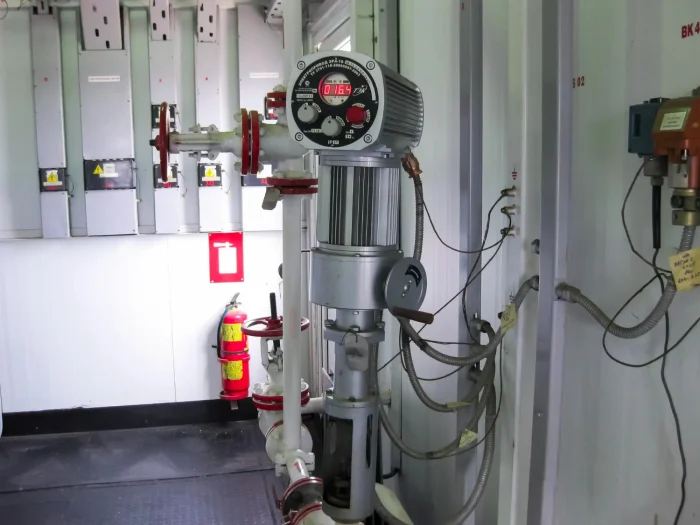
6. Foam Fire Suppression Systems
Foam systems are particularly important for certain flammable-liquid fire scenarios.
Petroleum products can create surface fires that cannot always be safely controlled with ordinary water application alone. Foam can form a layer over the burning liquid and help separate the fuel surface from oxygen and heat.
Foam systems may be considered for areas such as:
- Hydrocarbon storage tanks
- Tank farms
- Loading areas
- Flammable-liquid handling areas
- Process areas with relevant fire scenarios
The design needs to consider the type of hydrocarbon, storage arrangement, application method and applicable standards.
This is also an area where professional fire protection engineering is essential. Selecting the wrong extinguishing medium can reduce the effectiveness of emergency response.
7. Water Spray and Deluge Systems
Water spray and deluge systems are commonly used where equipment needs rapid cooling or where a fire can expose nearby equipment to significant radiant heat.
Unlike a standard fire sprinkler system, a deluge arrangement may discharge water through multiple open nozzles when the system is activated.
This can be useful for protecting:
- Process equipment
- Storage vessels
- Pumps
- Compressors
- Loading and unloading areas
- Other high-risk equipment
The purpose is not always to extinguish the fire directly. In some scenarios, water is used to cool equipment and reduce the possibility of escalation.
For LPG and other pressurised systems, protection against heat exposure can be particularly important.
Indian safety requirements also recognise the use of hydrants, hoses, mobile equipment, fixed monitors and fixed spray systems for appropriate fire protection applications.
8. Water Mist Systems
Water mist systems use finely divided water droplets to control fire while using less water than some conventional water-based approaches.
Depending on the application, water mist can provide cooling and help control combustion.
It can be considered for selected enclosed or specialised areas where conventional systems may not be the best option.
However, water mist should not automatically replace hydrants, deluge systems or other fire protection systems. The technology needs to be selected based on the fire scenario, equipment and design requirements.
9. Passive Fire Protection
Active systems respond to a fire. Passive fire protection helps prevent the fire from spreading or damaging critical structures.
This distinction is important.
Passive protection can include:
- Fire-resistant coatings
- Fire-rated walls
- Fire rated doors
- Fire-resistant structural protection
- Fire barriers
- Compartmentation
- Protection of critical supports
For example, structural steel supporting critical equipment may require fire protection so that it retains its required performance during a fire.
Passive protection can therefore buy valuable time for detection, shutdown, evacuation and firefighting systems to work.
10. Fire Rated Doors and Emergency Escape Protection
Buildings within an oil and gas facility may contain control rooms, electrical rooms, offices and other occupied spaces.
Fire rated doors can help restrict fire and smoke movement between protected areas when correctly specified and maintained.
Emergency escape routes should also be clearly identified and kept accessible.
A comprehensive emergency plan should consider:
- How a fire will be detected.
- How people will be alerted.
- How equipment will be isolated.
- Where employees will evacuate.
- How emergency responders will access the area.
- How critical equipment will be protected.
- How the incident will be controlled.
Fire safety is therefore not just about equipment. It is about creating a coordinated response.
11. Security Systems and Access Control
Fire safety and security are closely connected in high-risk industrial facilities.
Unauthorised access can create operational and safety risks, particularly in restricted process areas, storage zones and hazardous locations.
Access control systems can help facility managers control who enters specific areas.
Depending on the site, security infrastructure may include:
- Access control
- CCTV surveillance
- Visitor management
- Perimeter monitoring
- Biometric security
- Vehicle access control
- Security control rooms
However, security equipment installed in hazardous areas must be suitable for the area classification and applicable requirements. PESO administers the Petroleum Rules, 2002 and is responsible for safety-related approvals and inspections covering petroleum installations and hazardous equipment.
12. Emergency Shutdown and Fire & Gas Integration
The strongest systems are not isolated from one another.
A fire detector should be capable of initiating the appropriate alarm response. In suitable applications, fire and gas detection can also be integrated with emergency shutdown or process isolation systems.
For example:
Gas leak → Gas detector → Alarm → Control-room notification → Emergency shutdown → Isolation → Fire suppression/emergency response
The exact sequence depends on the facility’s engineering design and risk assessment.
This integration can reduce the time between hazard detection and corrective action.
How Should Indian Oil and Gas Facilities Choose Fire Safety Systems?
There is no single “best” system for every oil and gas facility.
The right solution starts with a detailed risk assessment.
Facility managers and safety officers should consider:
Type of facility
Is it a refinery, gas processing plant, pipeline station, terminal, tank farm or LPG facility?
Different installations have different hazards and applicable requirements.
Materials handled
Crude oil, petroleum products, LPG, LNG, natural gas and other hydrocarbons can require different protection strategies.
Storage configuration
Tank size, storage type, spacing and product characteristics influence fire scenarios and protection requirements.
Process hazards
High-pressure equipment, compressors, pumps, heaters and process units can introduce additional risks.
Hazardous area classification
Electrical and detection equipment must be appropriate for the area in which it is installed.
Emergency response capability
The facility should consider its own emergency response resources rather than assuming external firefighting resources will always be immediately available.
PESO’s responsibilities include approval and inspection activities related to petroleum storage installations, refineries and petroleum pipelines, among other facilities.
A Practical Fire Safety Strategy for Oil and Gas Facilities
For most high-risk facilities, an effective strategy should combine multiple layers of protection:
Layer 1: Prevention
Safe design, hazardous-area classification, electrical safety, operating procedures and maintenance.
Layer 2: Detection
Fire, flame, smoke and hydrocarbon gas detection.
Layer 3: Alarm
Audible, visual and control-room notification.
Layer 4: Isolation
Emergency shutdown and process isolation where applicable.
Layer 5: Active Protection
Hydrants, monitors, deluge, water spray, foam and other appropriate suppression systems.
Layer 6: Passive Protection
Fire barriers, fire-rated construction and structural protection.
Layer 7: Emergency Response
Trained personnel, emergency plans, drills and firefighting equipment.
This layered approach is much stronger than depending on one piece of equipment.
What Standards Should Facilities Consider in India?
Oil and gas companies should always identify the standards and statutory requirements applicable to their specific installation.
OISD currently lists OISD-STD-116 for fire protection facilities at petroleum refineries and oil/gas processing plants and OISD-STD-117 for petroleum depots, terminals, pipeline installations and lube oil installations.
OISD also identifies related standards and guidelines covering fire-fighting equipment, layouts, inspection and other safety matters.
PESO is another important authority for petroleum and explosive safety in India. Its responsibilities include administration of the Petroleum Rules and safety oversight of various petroleum and gas installations.
Therefore, companies should not select equipment based only on product specifications. They should first establish the applicable regulatory, engineering and site requirements.
Final Thoughts
The best fire safety system for an oil and gas facility is not a single product. It is a layered fire protection strategy.
Fire detection systems provide early warning. Fire alarms communicate the emergency. Fire hydrant systems and firewater networks provide firefighting capability. Foam, deluge, water spray and other suppression technologies address specific fire scenarios. Passive fire protection helps limit fire spread and protect critical structures.
Security systems also play an important supporting role by controlling access to high-risk areas and improving site monitoring.
For Indian oil and gas facilities, system selection should be based on risk assessment, facility type, hydrocarbon characteristics, applicable OISD standards, PESO requirements and the site’s emergency response plan.
For safety officers, facility managers and industrial decision-makers, the goal should be clear: detect hazards early, respond quickly, control escalation and protect people, assets and the surrounding environment.
Industry professionals looking to explore the latest fire protection, industrial security and safety technologies can also follow major Fire & Security India Expo events and exhibitions to compare solutions, meet technology providers and understand emerging trends across the Indian safety market.