
Fire Safety Systems for Airports, Metro Stations, and Transit Hubs
Airports, metro stations, railway terminals, and other transit hubs handle thousands of people every day. These facilities have large buildings, crowded waiting areas, electrical equipment, commercial spaces, underground sections, tunnels, parking areas, and complex transport infrastructure. A small fire can quickly become a major emergency if it is not detected and controlled in time.
For this reason, fire safety in transportation facilities cannot depend on a single system. It requires a combination of early detection, automatic suppression, water-based protection, smoke management, emergency communication, and passive fire protection.
In India, the need for stronger fire safety measures is particularly important as cities expand their metro networks and airports become busier. Modern transit infrastructure must be designed to protect passengers, employees, equipment, and critical operations while allowing safe evacuation during an emergency.
Why Fire Safety Is Critical in Transit Hubs
Transit facilities are different from ordinary commercial buildings. Passenger movement is continuous, and many people may not be familiar with the building layout. During peak hours, platforms and concourses can become extremely crowded.
There are also several potential fire hazards, including:
- Electrical panels and equipment
- Escalators and elevators
- HVAC systems
- Commercial kitchens and food outlets
- Battery charging areas
- Underground tunnels
- Parking facilities
- Fuel and maintenance areas
- Luggage and storage zones
- Electrical and communication rooms
An effective fire detection system must identify a developing fire as early as possible. At the same time, the facility needs reliable systems to control the fire and support evacuation.
Fire Detection Systems for Airports and Metro Stations
Early detection is one of the most important parts of fire protection. The faster a fire is identified, the more time passengers and staff have to respond.
Modern facilities commonly use smoke detectors, heat detectors, flame detectors, manual call points, and addressable fire alarm systems.
Smoke Detectors
Smoke detectors are widely used in passenger areas, offices, corridors, retail spaces, and other enclosed areas. They can identify smoke during the early stages of many fires.
However, airports and metro stations can have areas where conventional detectors are not suitable. Large halls, high ceilings, tunnels, and locations with dust or airflow may require specialized detection technologies.
Fire Alarms
Fire alarms connect detection devices with notification systems. Once a fire is detected, alarms can alert passengers, employees, security teams, and emergency responders.
In large transportation facilities, fire alarms should be integrated with the building’s central fire control system. This allows safety officers and facility managers to identify the affected zone and coordinate the emergency response.
Voice evacuation systems can also be used to provide clear instructions to passengers. This is particularly important in crowded public areas where a simple alarm sound may not provide enough information.
Also Read: The Future of Fire Detection: AI-Powered Smoke and Heat Sensors
Fire Suppression Systems
Detection alone cannot stop a fire. Once a fire has been identified, the facility needs appropriate fire suppression systems to control or extinguish it.
The choice of suppression technology depends on the type of area, fire risk, equipment installed, and operational requirements.
Common solutions include:
- Automatic sprinkler systems
- Fire hydrant systems
- Water mist systems
- Clean-agent suppression
- Foam-based systems for specific hazards
- Portable fire extinguishers
Different areas may require different solutions. A passenger concourse, electrical room, aircraft maintenance area, and underground tunnel do not have the same fire risk.
Also Read: The Role of Passive Fire Protection in High-Rise Buildings
Fire Sprinkler Systems in Transit Facilities
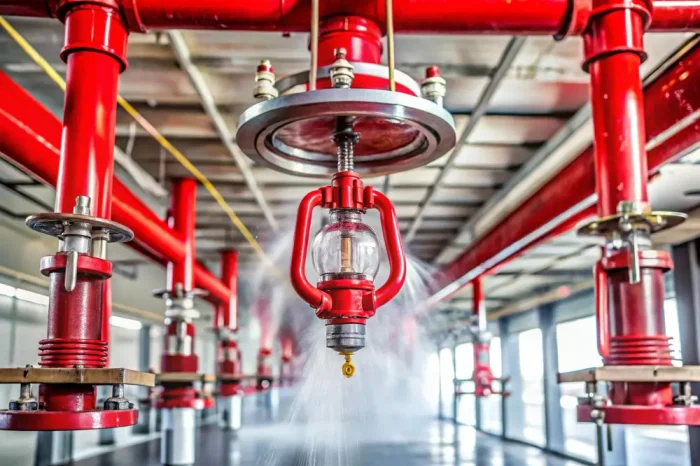
Fire sprinkler systems are an important component of active fire protection in many airports, metro stations, and transit buildings.
Automatic sprinklers are designed to respond to heat from a developing fire. Depending on the system design, individual sprinkler heads can activate when their operating temperature is reached.
Sprinklers can help slow fire growth and reduce the amount of heat and smoke generated before firefighters arrive.
In large transit facilities, sprinkler protection may be required in areas such as:
- Passenger terminals
- Offices
- Retail areas
- Food courts
- Storage rooms
- Parking areas
- Service areas
- Certain technical rooms
The system should be designed according to the applicable fire safety requirements and the specific characteristics of the building.
Fire Hydrant Systems
A fire hydrant system provides firefighters and trained emergency personnel with access to a reliable water supply during a fire.
Airports and metro stations can cover very large areas, so hydrant infrastructure needs careful planning. Pump capacity, water storage, pressure, pipe routing, hydrant locations, and accessibility all affect system performance.
Regular testing and maintenance are equally important. A hydrant system that has not been properly maintained may not deliver the required water pressure during an emergency.
Water Mist Systems for Special Applications
Water mist systems are increasingly considered for areas where conventional water discharge may not be the most suitable option.
These systems release very fine water droplets. The small droplets can absorb heat efficiently and help control fire conditions.
Water mist systems may be considered for certain technical areas, machinery spaces, transportation infrastructure, or locations where reducing water damage is important.
However, they should not be selected simply because they use less water. System selection should be based on fire risk assessment, testing data, building design, and applicable standards.
Passive Fire Protection
Active systems such as sprinklers and alarms are only one part of a complete fire safety strategy. Passive fire protection helps prevent fire and smoke from spreading through the building.
Important passive measures include:
- Fire-rated walls
- Fire rated doors
- Fire-resistant floors and ceilings
- Fire stopping around service penetrations
- Protected escape routes
- Compartmentation
- Smoke barriers
Fire Rated Doors
Fire rated doors can help maintain separation between different sections of a facility. For example, they may be used around staircases, technical rooms, electrical areas, corridors, and other fire compartments.
The doors need to remain functional and should not be blocked or improperly modified. Regular inspection is essential because damaged seals, faulty closers, or unauthorized alterations can reduce their effectiveness.
Smoke Management and Evacuation
In a large airport or metro station, smoke can be more dangerous than the flames themselves. Poor visibility can cause panic and make evacuation difficult.
Smoke management systems can help control the movement of smoke and maintain safer conditions along designated evacuation routes.
Transit facilities should also have clearly planned emergency exits, evacuation routes, emergency lighting, signage, and public announcement systems.
Evacuation planning should consider different scenarios. An incident on a platform may require a different response from a fire inside a retail outlet, electrical room, tunnel, or parking area.
Regular emergency drills help employees understand their responsibilities and identify weaknesses in the evacuation plan.
Security Systems and Fire Safety
Fire safety and security systems are increasingly interconnected in modern transportation facilities.
Access control systems can help restrict entry into sensitive areas such as electrical rooms, control centers, equipment rooms, and emergency infrastructure.
Biometric security can provide an additional layer of identity verification in restricted areas where stronger access control is required.
Integration between security and fire systems can also support emergency response. For example, access control information can help security teams understand who may be inside a restricted area during an incident.
However, safety should always take priority during an emergency. Security controls must be configured so that they do not prevent people from reaching safe areas or delay emergency response.
Role of Safety Officers and Facility Managers
Technology cannot replace proper emergency management. Safety officers and facility managers play a central role in maintaining fire safety throughout the life of a transit facility.
Their responsibilities can include:
- Inspecting fire protection equipment
- Scheduling system testing
- Maintaining emergency exits
- Checking fire doors
- Reviewing evacuation plans
- Conducting emergency drills
- Training employees
- Coordinating with emergency services
- Maintaining inspection records
- Identifying new fire hazards
Fire safety should also be reviewed whenever a building undergoes renovation or changes its use. Adding a restaurant, electrical equipment, battery storage, or commercial area can change the facility’s fire risk.
Fire Safety Challenges in Underground Metro Stations
Underground metro stations present additional challenges.
Limited access to the outside environment can make evacuation more complicated. Smoke can also move through tunnels, platforms, stairways, and ventilation systems.
Fire protection planning for underground facilities may therefore involve:
- Advanced fire detection
- Smoke detectors
- Tunnel detection technologies
- Automatic sprinkler systems where appropriate
- Fire hydrant systems
- Smoke extraction
- Emergency ventilation
- Emergency communication
- Fire-rated compartmentation
- Clearly marked evacuation routes
Metro operators should also consider fire scenarios involving trains, electrical systems, escalators, equipment rooms, and tunnel infrastructure.
Fire Safety at Airports
Airports combine passenger facilities with highly specialized operational areas. Terminal buildings may include check-in halls, baggage handling systems, restaurants, retail stores, offices, parking facilities, technical rooms, and aircraft-related infrastructure.
Each zone requires a risk-based approach.
For example, baggage handling areas may require specialized detection and suppression strategies because of conveyor equipment and continuous movement. Commercial kitchens have different risks because of cooking equipment and combustible oils. Electrical rooms may require suppression technologies designed to protect sensitive equipment.
Airport fire safety planning should therefore cover the entire facility rather than focusing only on passenger terminals.
Importance of Inspection and Maintenance
Even the most advanced fire protection equipment can fail if it is not properly maintained.
Regular inspection should cover fire alarms, smoke detectors, sprinkler systems, pumps, hydrants, emergency lighting, fire doors, extinguishers, suppression systems, and related equipment.
Maintenance teams should document inspections and immediately address faults.
Facility managers should also avoid treating fire safety as a one-time installation project. Fire protection is an ongoing process that needs testing, maintenance, employee training, and periodic risk assessment.
Following Indian Fire Safety Requirements
Fire safety systems in airports, metro stations, and transit hubs in India need to be planned and implemented according to applicable national, state, local, and project-specific requirements.
The National Building Code of India, relevant fire safety provisions, local fire authority requirements, and applicable technical standards may all need to be considered depending on the project.
Large infrastructure projects should involve qualified fire safety professionals during design, installation, commissioning, and maintenance. Compliance should be viewed as a minimum requirement rather than the final objective.
A strong fire safety strategy should focus on actual risks, passenger movement, building design, emergency response, and system reliability.
What Should Transit Facilities Upgrade in 2026?
As transportation infrastructure becomes more connected and automated, fire safety systems are also becoming more intelligent.
Transit operators should consider reviewing:
- The age and reliability of existing fire alarms
- Coverage of smoke and heat detection
- Sprinkler and hydrant system performance
- Fire pump and water storage capacity
- Passive fire protection and compartmentation
- Emergency communication systems
- Smoke management
- Emergency evacuation procedures
- Integration between security and fire systems
- Inspection and maintenance processes
The objective should not simply be to install newer technology. The goal is to create a coordinated system that can detect, control, communicate, and support evacuation during a real emergency.
Conclusion
Fire safety in airports, metro stations, and transit hubs requires a complete and integrated approach. Fire alarms and detection systems provide early warning, while fire suppression systems, sprinkler systems, and hydrants help control a fire. Passive fire protection, fire rated doors, smoke management, and well-planned evacuation routes help prevent an incident from becoming a larger emergency.
At the same time, security systems such as access control can support emergency management when properly integrated with fire protection infrastructure.
For safety officers and facility managers, regular inspection, testing, employee training, and risk assessment are just as important as the initial installation of equipment.
As India’s transportation infrastructure continues to expand, investing in reliable fire protection is not only about meeting regulations. It is about creating safer environments for passengers, employees, emergency responders, and critical infrastructure.
For professionals looking to explore the latest developments in fire protection, security technology, detection systems, and emergency safety solutions, events such as the Fire & Security India Expo 2026 can provide an opportunity to learn about emerging technologies, industry solutions, and changing safety requirements in India.