
Fire Protection Requirements for Petroleum Storage Facilities in India
Introduction
Petroleum storage facilities play a vital role in India’s oil and gas industry. These facilities store petrol, diesel, crude oil, lubricants and other flammable products. However, the presence of combustible liquids and vapours creates serious fire and explosion risks.
A small leak, electrical fault or static electricity discharge can become a major safety incident. Such incidents can damage equipment, threaten human life and disrupt industrial operations.
For this reason, fire protection requirements for petroleum storage facilities in India involve more than installing fire extinguishers. Facilities need suitable fire detection, firefighting equipment, safe storage layouts, trained personnel and tested emergency procedures.
Indian regulations and industry standards provide guidance on these requirements. The Petroleum and Explosives Safety Organisation (PESO) administers important petroleum storage licensing requirements. The Oil Industry Safety Directorate (OISD), under the Ministry of Petroleum and Natural Gas, develops safety standards for petroleum installations. https://oisd.gov.in/oisd-standards
This guide explains the main fire protection measures that petroleum storage operators, safety officers and facility managers should understand.
1. Which Regulations Govern Fire Protection in Petroleum Storage Facilities in India?
Petroleum storage operators must identify the regulations and standards that apply to their specific facility. Requirements can vary according to the petroleum product, storage capacity, installation type and operating conditions.
Petroleum Rules, 2002
The Petroleum Rules, 2002, establish important requirements for petroleum storage, licensing and fire precautions. Rule 116 addresses licensing for storage, subject to specified exceptions. Rule 117 covers precautions against fire, including restrictions on smoking and ignition sources and the provision of suitable firefighting equipment. https://indiankanoon.org/doc/144342282/
Operators should determine whether their storage installation requires a PESO licence and comply with the relevant licence conditions.
OISD safety standards
Several OISD standards have statutory backing under the Petroleum Rules, 2002. Important examples include:
- OISD-STD-116: Fire protection facilities for petroleum refineries, petrochemical complexes and oil and gas processing plants.
- OISD-STD-117: Fire protection facilities for petroleum depots, terminals, pipeline installations and lubricating oil installations.
- OISD-STD-118: Layouts for oil and gas installations.
- OISD-STD-105: Work permit system.
These standards address different aspects of industrial fire prevention and protection. OISD-STD-116 and OISD-STD-117 are particularly relevant when assessing firefighting facilities at petroleum installations.https://oisd.gov.in/list-of-oisd-standards-in-various-statutory-regulations
Important: Operators should consult the latest applicable editions, current statutory requirements and site-specific approvals before finalising a fire protection design.
Also Read: The Future of Fire Detection: AI-Powered Smoke and Heat Sensors
2. Fire Risk Assessment and Safe Storage Layout
Effective fire protection begins with understanding the hazards present at the site.
Petroleum facilities should assess risks associated with storage tanks, loading bays, transfer pumps, pipelines, electrical equipment and product handling operations.
A fire risk assessment should consider:
- The type and quantity of petroleum products stored.
- The possibility of leakage, spills and vapour formation.
- Potential ignition sources and hazardous areas.
- The distance between tanks and nearby equipment.
- Access for emergency vehicles and firefighting teams.
- Possible fire escalation from one tank to another.
The facility layout should provide appropriate separation distances, access routes and protective arrangements in accordance with the applicable standards.
Where required, bunds or containment systems should limit the spread of spilled petroleum. Drainage arrangements should prevent flammable liquids from spreading into unsafe areas.
Safe layout planning is essential because it can reduce the likelihood of a fire spreading beyond its point of origin.
Also Read: The Role of Passive Fire Protection in High-Rise Buildings
3. Fire Hydrant Systems and Dedicated Firewater Supply
A fire hydrant system is a key component of industrial fire protection. It provides firefighting water through a network of pipes, hydrants, valves and hose connections.
Petroleum installations need a firewater arrangement designed for their specific hazards and firefighting requirements.
Main components of a fire hydrant system
A typical industrial system may include:
- Firewater storage tanks or reservoirs.
- Main and standby fire pumps, as required by the design.
- A distribution network of firewater pipes.
- Hydrant points and hose boxes.
- Monitors for directing water onto exposed equipment.
- Valves, pressure monitoring and associated controls.
The system should provide adequate water flow and pressure for the required firefighting scenarios.
OISD fire protection guidance includes coverage of tank farms and other areas where hydrocarbons are handled. Its standards also address the firewater capacity and facilities needed for industrial installations. https://www.oisd.gov.in/public/assets/filemanager/1742541199_e2b8de065ca3061addb4.pdf
Facilities should not assume that the local municipal water supply will be sufficient during a major incident. The firewater system must be designed according to the applicable standard and the installation’s assessed risks.
Regular testing is also important. Fire pumps, hydrants, valves and monitors should remain accessible and ready for use.
Early detection gives operators valuable time to respond before an incident becomes more serious. A suitable fire detection system should reflect the hazards present in each plant area.
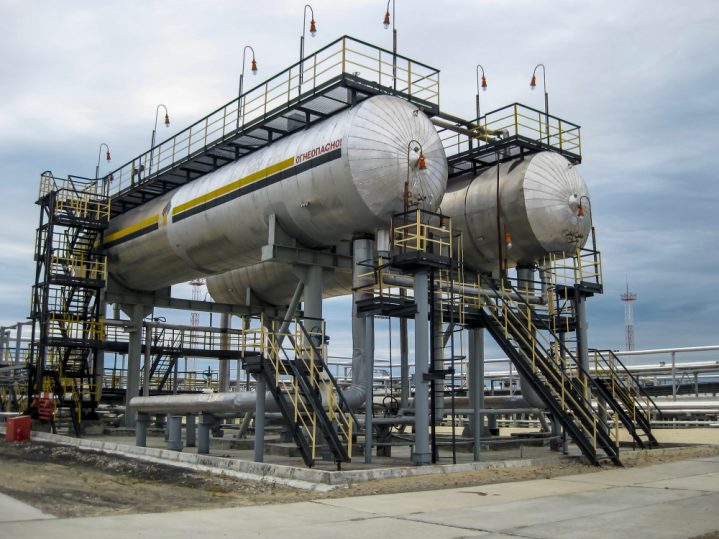
4. Fire Suppression Systems for Petroleum Storage Tanks
Fire suppression systems help control or extinguish fires and reduce the risk of escalation. The appropriate system depends on the product stored, tank design, potential fire scenario and applicable engineering standards.
Fixed foam firefighting systems
Foam systems are widely used to address fires involving flammable and combustible liquids. Suitable foam can form a blanket over the liquid surface, helping to suppress flammable vapours and control combustion.
A fixed foam system may include foam concentrate storage, proportioning equipment, piping and suitable discharge devices.
Designers must select foam concentrates compatible with the stored product and the relevant environmental and regulatory requirements. System capacity and application arrangements should follow the applicable design standard.
Fixed water spray systems
Water spray systems can cool exposed tank surfaces and nearby equipment during a fire. Cooling helps limit heat exposure and reduces the risk of fire spreading to adjacent equipment.
OISD-STD-116 addresses fixed water spray protection for specified petroleum storage tanks. The precise requirements depend on the product class, tank dimensions and applicable provisions. https://oisd.gov.in/oisd-standards
Automatic sprinkler systems
Automatic sprinkler systems may be appropriate for certain buildings, enclosed operating areas and equipment spaces. However, conventional sprinklers are not a universal solution for every petroleum tank fire.
The system must match the hazard. Foam systems, water spray, dry chemical systems and other specialised fire suppression systems may be needed for different scenarios.
5. Fire Detection Systems and Fire Alarms
Early detection gives personnel more time to respond before a small incident develops into a major emergency.
A suitable fire detection system can identify signs of fire, heat or hazardous conditions and alert operators through alarms and monitoring systems.
Depending on the facility, the system may include:
- Flame detectors in areas with rapid-fire potential.
- Heat detectors in suitable equipment spaces.
- Smoke detectors in buildings where smoke detection is appropriate.
- Gas detectors for detecting flammable vapours.
- Manual call points at designated locations.
- Audible and visual fire alarms.
- A fire alarm control panel and monitoring interfaces.
Detector selection should reflect the environment. For example, outdoor tank farms may require detection technologies suitable for open spaces, weather exposure and the expected fire scenario.
The system should also be integrated with relevant emergency procedures and, where designed and approved, automatic shutdown or suppression functions.
Regular testing is essential to confirm that alarms, detectors and control panels work correctly.
6. Passive Fire Protection and Fire-Rated Doors
Active systems detect or respond to fire. Passive fire protection helps limit its spread and protects critical equipment and escape routes.
Common passive fire protection measures include fire-resistant construction, suitable fire-rated doors, protected structural elements and fire-resistant sealing around service penetrations.
Fire-rated doors can help maintain compartmentation when installed in appropriate locations. They should have the required fire rating and compatible frames, hardware and seals.
Cable penetrations, pipe openings and gaps through fire-resistant walls must also receive suitable fire stopping.
In petroleum installations, passive protection should be selected according to the site’s fire risk assessment and applicable engineering requirements. It can provide valuable additional protection where critical structures, control rooms or emergency escape routes may be exposed to fire.
7. Electrical Safety and Ignition Control
Petroleum vapours can ignite if they encounter a suitable ignition source. Electrical safety is therefore a major part of fire prevention.
Facilities should identify hazardous areas and select electrical equipment suitable for the applicable area classification.
Key precautions include:
Using approved equipment appropriate for hazardous locations.
Maintaining electrical installations and protective devices.
Providing suitable earthing and bonding arrangements.
Controlling static electricity during product transfer.
Inspecting pumps, motors, cables and electrical panels.
Controlling hot work through a formal permit system.
Hot work, such as welding and cutting, should only proceed after the required authorisation and safety checks. These may include isolation, gas testing, removal of combustible materials and continuous monitoring, depending on the work and risk.
OISD-STD-105 provides a framework for work permits, while other relevant OISD standards address hazardous-area classification and static electricity. https://oisd.gov.in/oisd-standards
8. Fire Safety Training and Emergency Preparedness
Even a well-designed fire protection system can fail to deliver the expected results if personnel do not understand how to respond.
Safety officers and facility managers should ensure that employees receive training relevant to their duties.
Training should cover:
- Recognising fire hazards and reporting unsafe conditions.
- Raising the alarm and contacting emergency responders.
- Following evacuation routes and assembly procedures.
- Using portable fire extinguishers when trained and safe to do so.
- Understanding emergency shutdown procedures.
- Responding to petroleum spills and suspected gas leaks.
- Supporting firefighting teams without entering unsafe areas.
Facilities should conduct emergency drills and review their results. Drills can identify problems with alarm audibility, evacuation routes, communication and coordination.
Employees should never be expected to fight a large petroleum fire without the required training, equipment and emergency support.
9. Inspection, Testing and Maintenance of Fire Protection Equipment
Fire protection equipment must remain operational throughout the facility’s working life.
A preventive maintenance programme should cover fire pumps, hydrants, hoses, foam equipment, extinguishers, detection systems, alarms, valves and emergency lighting where installed.
Facility managers should maintain records of inspections, tests, defects and corrective actions.
A practical inspection programme includes:
- Checking fire extinguishers for accessibility, condition and service status.
- Testing fire pumps and associated equipment according to the approved maintenance plan.
- Inspecting hydrant piping, valves, hoses and connections.
- Testing detectors, alarms and control panels.
- Verifying the condition of foam equipment and concentrate.
- Confirming that emergency routes and firefighting access remain clear.
- Closing maintenance gaps and documenting completed repairs.
Inspection frequency and testing procedures should follow the applicable standards, manufacturer instructions and site-specific requirements.
OISD also publishes standards and guidance for inspecting firefighting equipment and industrial safety systems. https://oisd.gov.in/oisd-standards
10. Common Fire Safety Challenges in Petroleum Storage Facilities
Petroleum storage operators may face several challenges when implementing fire protection measures.
Ageing equipment: Older installations may have deteriorated pipes, unreliable valves or outdated detection equipment. Regular assessment can help identify the need for repairs or upgrades.
Inadequate maintenance: A fire pump or suppression system that fails during an emergency can delay the response. Preventive maintenance and functional testing reduce this risk.
Poor housekeeping: Waste, vegetation and combustible materials can create additional hazards or obstruct access. Facilities should maintain clean operating areas.
Insufficient training: Employees may not know the correct evacuation procedure or how to raise an alarm. Regular training and emergency drills help improve readiness.
Changing site conditions: New tanks, modified pipelines or changes in stored products can affect the original risk assessment. Management of change procedures should ensure that fire protection arrangements remain suitable.
Addressing these challenges requires continuous safety management rather than a one-time installation of firefighting equipment.
11. How Technology Is Improving Petroleum Fire Safety
Modern technologies can improve fire detection, monitoring and emergency coordination.
Intelligent fire alarm panels can help operators identify the location of an alarm quickly. Remote monitoring can provide visibility into system status, while integrated control systems may support emergency shutdown functions where appropriate.
Thermal imaging can help identify abnormal temperature patterns during inspections. Digital maintenance records can also make it easier to track equipment condition, testing schedules and unresolved defects.
These technologies should complement, not replace, sound engineering design and trained personnel. Each solution must be assessed for suitability in the hazardous environment.
12. Why the Fire and Security Industry Matters for Petroleum Safety
Petroleum storage facilities depend on a combination of fire protection equipment, industrial safety solutions and security controls.
Access control systems can help restrict entry to authorised personnel. CCTV, perimeter protection and appropriate monitoring systems can support site security and incident investigation.
At the same time, fire detection, suppression, passive protection and emergency communication systems help protect people, property and operations.
Industry exhibitions provide opportunities for petroleum operators, safety professionals, system integrators and equipment manufacturers to explore emerging solutions and discuss practical safety challenges.
The Fire & Security India Expo 2027 is relevant to professionals interested in fire safety, security technologies and industrial protection solutions. Visitors can use industry events to learn about available technologies, connect with manufacturers and explore solutions suited to their operational needs.
Frequently Asked Questions (FAQs)
1. Which standards govern fire protection in petroleum storage facilities in India?
The Petroleum Rules, 2002, and applicable OISD standards are important references. OISD-STD-117 is particularly relevant to petroleum depots and terminals, while OISD-STD-116 addresses refineries and oil and gas processing plants. The applicable requirements depend on the installation and its approvals.
2. Is a PESO licence required for petroleum storage in India?
A PESO licence is required for petroleum storage where the Petroleum Rules, 2002, prescribe one. Certain exceptions apply. Operators should check the applicable product classification, quantity, storage arrangement and licensing conditions before commencing operations.
3. Which fire suppression system is suitable for petroleum storage tanks?
The appropriate system depends on the petroleum product, tank design, storage capacity and assessed fire scenarios. Depending on the installation, suitable protection may include foam systems, fixed water spray, hydrants and other specialised firefighting equipment.
4. Why is a fire hydrant system important in petroleum facilities?
A fire hydrant system provides access to firefighting water across designated areas of a facility. It supports emergency response and helps firefighting teams control fires and cool exposed equipment when required.
5. How often should petroleum fire protection systems be inspected?
Inspection and testing schedules should follow applicable regulations, OISD requirements, manufacturer instructions and the facility’s approved maintenance programme. Equipment should also be checked after defects, repairs or changes that could affect its operation.
6. How can petroleum facilities improve fire safety?
Facilities can improve fire safety through risk assessments, compliant storage layouts, suitable detection and suppression systems, ignition control, preventive maintenance, employee training and regular emergency drills.
Fire protection requirements for petroleum storage facilities in India combine statutory compliance, sound engineering and effective operational practices.
Petroleum operators should understand the Petroleum Rules, 2002, identify the OISD standards applicable to their installations and confirm their PESO licensing obligations. They should also maintain suitable fire hydrant systems, fire suppression equipment, detection and alarm systems, passive fire protection and emergency response arrangements.
Most importantly, fire safety must remain an ongoing responsibility. Regular inspections, staff training and timely maintenance help reduce risks and improve emergency readiness.
For professionals working in petroleum safety, industrial fire protection and security, the Fire & Security India Expo 2027 offers an opportunity to explore industry solutions and connect with relevant technology providers.
Protecting petroleum storage facilities requires the right equipment, the right procedures and a strong safety culture.