
Oil and Gas Fire Safety Regulations in India: What Facility Managers Should Know
The oil and gas industry plays an important role in India’s energy infrastructure. From oil refineries and petroleum storage terminals to gas processing plants and pipeline networks, these facilities handle large quantities of flammable and hazardous materials every day. While these operations support industrial growth, they also involve serious fire and explosion risks.
A small leak, electrical fault, equipment failure, or uncontrolled ignition source can lead to a major industrial accident. Such incidents can damage expensive infrastructure, interrupt operations, harm workers, and affect nearby communities.
This makes fire safety in the oil and gas industry a critical responsibility for facility managers, plant operators, safety officers, and industrial management teams.
In India, oil and gas facilities must follow several regulations, technical standards, and safety guidelines. These include requirements under the Petroleum Rules, OISD standards, and regulations issued by the Petroleum and Natural Gas Regulatory Board (PNGRB). Depending on the facility and the chemicals handled, additional environmental and industrial safety requirements may also apply.
Understanding these regulations is essential for maintaining compliance and building a reliable fire protection strategy.
Why Is Fire Safety Important in the Oil and Gas Industry?
Oil and gas facilities operate in environments where flammable liquids, gases, vapours, and chemicals are frequently handled. Many of these substances can ignite when exposed to heat, sparks, static electricity, or open flames.
Unlike ordinary commercial buildings, industrial oil and gas installations may experience rapidly developing fires, flash fires, pool fires, jet fires, and vapour cloud explosions.
Some common fire hazards include:
- Flammable liquid storage: Petrol, diesel, crude oil, and other petroleum products can create significant fire risks during storage and transfer.
- Gas leakage: Natural gas, LPG, and other hydrocarbons can form explosive mixtures when mixed with air.
- Electrical equipment: Faulty wiring, damaged motors, and unsuitable electrical installations can become ignition sources.
- Hot work activities: Welding, cutting, grinding, and maintenance activities can produce sparks near flammable materials.
- Static electricity: Improper bonding and grounding during fuel transfer can cause electrostatic discharge.
- Equipment overheating: Pumps, compressors, boilers, and processing equipment may create dangerous temperatures when poorly maintained.
These risks make industrial fire protection systems essential. Facilities need appropriate fire detection, alarm, suppression, passive protection, emergency response, and inspection procedures.
Also Read: The Future of Fire Detection: AI-Powered Smoke and Heat Sensors
Key Fire Safety Regulations and Standards in India
India has developed a regulatory framework to improve industrial safety and reduce fire-related risks in petroleum and gas installations. Facility managers should understand the following important regulations and standards.
1. Petroleum Rules, 2002
The Petroleum Rules, 2002, framed under the Petroleum Act, 1934, establish important safety requirements for the storage, handling, and transportation of petroleum products.
These rules are particularly relevant to petroleum storage installations, fuel handling facilities, and other licensed premises.
Important safety considerations include:
- Following applicable licensing conditions for petroleum storage and handling.
- Maintaining appropriate fire extinguishers and firefighting equipment.
- Preventing unauthorised ignition sources in hazardous areas.
- Maintaining safe operating practices during petroleum handling.
- Ensuring that employees understand the relevant safety precautions.
- Keeping installations clean and free from combustible waste.
The rules also refer to applicable OISD standards for fire protection at petroleum installations.
Facility managers should review the licensing conditions and ensure that fire protection arrangements match the nature, quantity, and classification of petroleum products stored at their premises.
2. Oil Industry Safety Directorate (OISD) Standards
The Oil Industry Safety Directorate (OISD), functioning under the Ministry of Petroleum and Natural Gas, develops technical safety standards and guidelines for India’s oil and gas industry.
These standards address fire prevention, equipment safety, operational controls, storage, handling, and emergency preparedness.
Some important OISD standards related to fire protection include:
OISD-STD-116: Fire Protection Facilities for Petroleum Refineries and Oil/Gas Processing Plants
This standard covers fire protection requirements for petroleum refineries, petrochemical complexes, and oil and gas processing plants. It provides guidance on designing and maintaining suitable firefighting facilities for these installations.
OISD-STD-117: Fire Protection Facilities for Petroleum Depots, Terminals, Pipeline Installations and Lube Oil Installations
This standard addresses fire protection requirements for petroleum depots, terminals, pipeline installations, and lubricant facilities.
OISD-GDN-115: Guidelines on Fire Fighting Equipment and Appliances in Petroleum Industry
This guideline provides recommendations concerning firefighting equipment and appliances used in petroleum installations.
OISD-STD-118: Layouts for Oil and Gas Installations
This standard addresses the layout and safety considerations of oil and gas installations, helping reduce the potential impact of fire and other industrial hazards.
Facility managers should identify which standards apply to their specific operations. They should also verify the latest editions and applicable statutory requirements before planning upgrades or conducting compliance assessments.
3. PNGRB Technical Standards and Specifications Including Safety Standards
The Petroleum and Natural Gas Regulatory Board (PNGRB) regulates specific activities across India’s petroleum and natural gas sector.
Its Technical Standards and Specifications Including Safety Standards (T4S) regulations establish technical and safety requirements for different types of installations.
Relevant regulatory categories include:
- Petroleum installations.
- Petroleum refineries and gas processing plants.
- LPG storage, handling, and bottling facilities.
- LNG storage and regasification facilities.
- Natural gas pipelines and city gas distribution networks.
These regulations address important safety aspects such as installation design, equipment integrity, operational safety, fire protection, inspection, and emergency preparedness.
Facility managers should consult the relevant PNGRB regulations based on the type of installation they operate. They should also check amendments and consolidated versions to avoid relying on outdated requirements.
4. Manufacture, Storage and Import of Hazardous Chemicals Rules, 1989
The Manufacture, Storage and Import of Hazardous Chemicals (MSIHC) Rules, 1989, were introduced under the Environment (Protection) Act, 1986.
These rules are relevant to facilities that manufacture or store hazardous chemicals above specified thresholds.
Their requirements include identifying major accident hazards, maintaining safety information, preparing safety reports where applicable, and developing emergency response arrangements.
One important requirement is the preparation and maintenance of an on-site emergency plan.
For applicable facilities, the plan must explain how major accidents will be managed. It should identify responsible personnel, emergency communication arrangements, hazardous material locations, and response procedures.
The rules also require periodic mock drills. Under Rule 13, applicable occupiers must conduct an on-site emergency plan mock drill every six months and make the drill report available to the concerned authority.
Facility managers should assess whether their installation falls within the applicable hazardous chemical thresholds and maintain the required documentation and emergency arrangements.
5. National Building Code of India (NBC) and State Fire Safety Requirements
The National Building Code of India (NBC), published by the Bureau of Indian Standards (BIS), provides guidance on fire and life safety in buildings.
Its fire and life safety provisions cover areas such as building access, means of escape, fire detection, firefighting installations, and emergency planning.
Oil and gas facilities may also need to comply with applicable state fire service laws, local building requirements, and fire department approval conditions.
Facility managers should check the requirements of the relevant state fire authority. A general building fire approval should not be treated as a replacement for industry-specific petroleum safety compliance.
Also Read: The Role of Passive Fire Protection in High-Rise Buildings
Essential Fire Protection Systems for Oil and Gas Facilities
Understanding regulations is only one part of industrial fire safety. Facilities must also install suitable equipment to detect, control, and respond to fire emergencies.
The selection of equipment should depend on the facility layout, fire risk assessment, type of hydrocarbons, and applicable OISD and PNGRB requirements.
1. Fire Detection and Alarm Systems
Early detection is essential in facilities handling flammable gases and liquids.
A suitable fire detection system can identify abnormal conditions and alert personnel before an incident becomes more serious.
Common detection equipment includes:
- Smoke detectors for suitable enclosed areas.
- Heat detectors in locations with high ambient temperatures.
- Flame detectors for rapid detection of visible flames.
- Gas detectors for identifying flammable gas leaks.
- Manual call points for employees to raise an alarm.
These devices should connect to suitable alarm and control systems. Critical facilities may also integrate detection with emergency shutdown systems, ventilation controls, and other safety interlocks where the approved design requires it.
2. Fire Hydrant and Water Spray Systems
Fire hydrant systems provide firefighting water through strategically positioned hydrants, monitors, hoses, and associated equipment.
They are important in refineries, storage terminals, and other large industrial installations.
Fixed water spray systems can also protect selected equipment and structures exposed to fire. Their purpose may include cooling equipment, controlling heat exposure, and reducing the risk of fire escalation.
Facility managers should ensure that firewater pumps, storage tanks, pipelines, valves, and hydrant points are maintained and tested as required.
3. Foam-Based Fire Suppression Systems
Foam fire suppression systems are widely used for suitable flammable liquid fire hazards.
They work by forming a blanket over the burning liquid surface. This helps separate fuel vapours from oxygen and reduces the risk of re-ignition.
Foam systems may be used in:
- Petroleum storage tanks.
- Tank bunds and containment areas.
- Fuel loading and unloading areas.
- Pump houses and process facilities.
- Other locations identified through fire risk assessment.
The foam concentrate and application method must be suitable for the specific fuel and fire scenario. Facility managers should also check compatibility with stored products and applicable environmental requirements.
4. Gas-Based and Specialised Fire Suppression Systems
Certain enclosed electrical rooms, control rooms, and equipment spaces may require specialised suppression solutions.
Depending on the risk assessment, these may include clean-agent systems or other approved gaseous suppression arrangements.
Water mist systems may also be suitable for selected applications where their performance has been demonstrated for the specific hazard.
However, no single suppression technology is suitable for every oil and gas application. The system must be selected according to the actual fire risk, equipment design, and applicable standards.
5. Passive Fire Protection
Active fire protection systems detect or control fires. Passive fire protection helps slow the spread of heat and fire.
Examples include:
- Fire-resistant structural coatings.
- Fire-rated walls and doors.
- Fire-resistant cable protection.
- Suitable fire-rated barriers.
- Protection for critical structural supports.
Passive fire protection can help maintain structural integrity and provide additional time for emergency response and evacuation.
Fire protection and physical security often work together in oil and gas facilities. Unauthorised access, unsafe activities, and security breaches can increase operational risks.
Key Fire Safety Responsibilities of Facility Managers
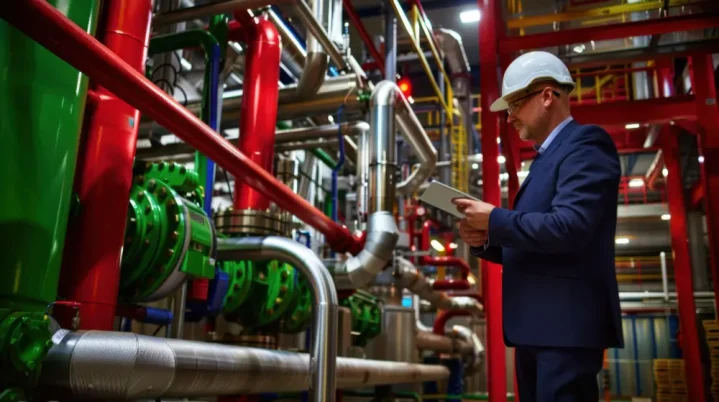
Facility managers play an important role in ensuring that fire protection arrangements remain effective throughout daily operations.
Installing equipment is not enough. Systems must be inspected, tested, maintained, and supported by trained employees.
Here are some important responsibilities.
1. Conduct regular fire risk assessments
Identify potential ignition sources, hazardous materials, gas leakage points, and high-risk operating areas. Review assessments whenever processes, equipment, or storage arrangements change.
2. Maintain fire safety equipment
Inspect extinguishers, hydrants, fire pumps, detectors, alarms, and suppression systems according to applicable standards and maintenance schedules. Keep records of inspections and corrective actions.
3. Implement a permit-to-work system
Hot work, confined space entry, and maintenance activities can create serious hazards. Ensure that authorised personnel issue permits and verify required precautions before work begins.
4. Train employees and safety officers
Employees should understand alarm signals, evacuation routes, emergency shutdown procedures, and the safe use of firefighting equipment.
5. Conduct emergency drills
Mock drills help identify weaknesses in emergency response. Record observations, evaluate employee response, and correct identified gaps.
6. Maintain compliance documentation
Keep relevant licences, inspection reports, equipment maintenance records, training documents, risk assessments, and emergency plans available for review.
Common Fire Safety Mistakes in Oil and Gas Facilities
Even facilities with modern equipment can face safety problems when maintenance and operational controls are weak.
Some common mistakes include:
- Using unsuitable fire extinguishers for particular fuel hazards.
- Ignoring minor gas leaks or unusual equipment temperatures.
- Allowing hot work without proper authorisation.
- Blocking access to hydrants and emergency exits.
- Failing to test fire detection and alarm systems.
- Neglecting fire pump maintenance.
- Keeping outdated emergency response plans.
- Failing to conduct scheduled employee training and mock drills.
These issues can increase the impact of an emergency. Regular audits and preventive maintenance help identify problems before they become serious.
Fire Safety Compliance Checklist for Facility Managers
Facility managers can use the following checklist as a starting point for internal reviews.
Safety area | What to verify |
Regulatory compliance | Applicable Petroleum Rules, OISD and PNGRB requirements |
Fire detection | Detectors, alarms and control panels |
Fire suppression | Suitable foam, water or specialised systems |
Fire hydrants | Accessibility, pressure and equipment condition |
Fire extinguishers | Correct type, location and maintenance |
Electrical safety | Hazardous-area equipment and grounding |
Emergency planning | Updated on-site emergency plan |
Employee training | Fire response and evacuation training |
Mock drills | Scheduled drills and documented findings |
Documentation | Licences, inspections and maintenance records |
This checklist does not replace a statutory inspection or detailed engineering assessment. It provides a practical starting point for identifying potential compliance gaps.
How Technology Is Improving Industrial Fire Safety
Modern industrial facilities are increasingly adopting connected safety technologies to improve fire prevention and emergency response.
Integrated fire detection systems can provide faster alerts and help operators identify the location of an incident.
Gas detection networks can monitor hazardous areas continuously. Automated shutdown arrangements can help isolate equipment or processes when specified dangerous conditions occur.
Other developments include:
- Intelligent fire alarm monitoring.
- Integrated safety and security control rooms.
- Remote monitoring of critical fire protection equipment.
- Automated emergency notification systems.
- Digital inspection and maintenance records.
When properly designed and maintained, these technologies can improve operational visibility and support faster decision-making.
Why Regular Fire Safety Audits Matter
A fire safety audit helps facility managers evaluate whether existing protection systems are suitable for current operating conditions.
It can identify damaged equipment, outdated procedures, inadequate maintenance, and gaps in employee training.
An effective audit should review:
- Applicable regulatory and technical requirements.
- Fire and explosion hazards across the facility.
- Detection and suppression system performance.
- Firewater availability and equipment readiness.
- Emergency access and evacuation arrangements.
- Employee training and drill performance.
- Documentation and corrective action records.
Audits should be conducted at suitable intervals and whenever significant operational changes introduce new risks.
Frequently Asked Questions About Oil and Gas Fire Safety Regulations in India
1. What are the main fire safety regulations for the oil and gas industry in India?
The main regulatory framework includes the Petroleum Rules, 2002, applicable OISD standards, PNGRB Technical Standards and Specifications Including Safety Standards, and the MSIHC Rules, 1989, where applicable.
2. What is OISD-STD-116?
OISD-STD-116 specifies fire protection facility requirements for petroleum refineries, petrochemical complexes, and oil and gas processing plants.
3. Which fire protection systems are required in oil refineries?
Depending on the facility’s design and risk assessment, fire protection arrangements may include hydrant networks, water spray systems, foam suppression systems, fire detection and alarm systems, and portable extinguishers.
4. How often should oil and gas facilities conduct emergency mock drills?
Under Rule 13 of the MSIHC Rules, applicable occupiers must conduct on-site emergency plan mock drills every six months.
5. What is the role of a facility manager in industrial fire safety?
Facility managers oversee fire risk assessments, equipment inspections, preventive maintenance, employee training, emergency preparedness, and applicable regulatory compliance.
6. Why are fire safety audits important for petroleum facilities?
Fire safety audits help identify equipment failures, operational hazards, maintenance gaps, and weaknesses in emergency response arrangements.
Fire safety in the oil and gas industry requires more than installing extinguishers and alarms. It demands a complete approach that combines regulatory compliance, risk assessment, reliable fire protection equipment, employee training, and continuous monitoring.
Indian regulations and technical standards, including the Petroleum Rules, OISD standards, PNGRB T4S regulations, and applicable hazardous chemical requirements, provide an important foundation for safer industrial operations.
For facility managers, the priority should be to understand which requirements apply to their installations and ensure that every safety system remains operational and ready for an emergency.
Investing in appropriate industrial fire protection systems, conducting regular audits, and developing a strong safety culture can help protect employees, infrastructure, and surrounding communities.
Also Read: How Modern Fire Sensors Work in Big Buildings
Explore Fire Safety Innovations at Fire & Security India Expo 2027
Keeping up with new fire protection technologies and industrial safety solutions is important for every facility manager.
Fire & Security India Expo 2027 brings together manufacturers, technology providers, industry professionals, and safety experts to explore developments in fire detection, fire suppression, industrial security, and integrated safety solutions.
Discover the latest innovations and connect with industry professionals at Fire & Security India Expo 2027 in New Delhi.