Biometric Security Systems and Their Role During Fire Emergencies
Modern buildings are becoming smarter every year. Offices, hospitals, factories, malls, hotels, and residential complexes now depend on advanced security technologies to protect people and property. Among these technologies, biometric security systems are playing a major role in improving building safety and emergency response.
In India, the demand for integrated fire and security solutions is growing rapidly. Facility managers, safety officers, and building owners are now looking for systems that can handle both daily security operations and emergency situations together. This is why biometric security has become an important topic at major industry events like the Fire & Security India Expo 2026 and other leading fire and safety exhibitions in India.
Biometric technology is no longer limited to attendance systems. It is now connected with access control systems, fire alarms, smoke detectors, fire detection systems, and emergency evacuation planning. During a fire emergency, these systems can help save time, reduce confusion, and improve overall building safety.
What Is a Biometric Security System?
A biometric security system uses unique human characteristics for identification. These may include fingerprints, facial recognition, iris scanning, or palm recognition. Unlike passwords or ID cards, biometric details cannot be easily lost or copied.
These systems are commonly installed at:
- Office entrances
- Data centers
- Industrial facilities
- Hospitals
- Airports
- Residential towers
- Government buildings
Biometric security is usually connected with access control systems to manage who can enter restricted areas. The system stores user information and grants access only to authorized individuals.
Today, many smart buildings in India combine biometric security with fire detection systems and emergency response tools for better protection.
Why Fire Emergencies Need Smarter Security Systems
During a fire emergency, every second matters. Traditional security systems may create delays if doors remain locked or if evacuation data is unavailable. In crowded buildings, confusion can increase quickly.
This is where integrated security systems become useful.
When biometric security is linked with fire alarms and fire suppression systems, the entire building can respond automatically. The system can:
- Unlock emergency exits
- Track occupied zones
- Help rescue teams identify trapped individuals
- Restrict access to dangerous areas
- Improve evacuation management
Modern buildings are now moving toward centralized safety management where biometric security works together with fire sprinkler systems, smoke detectors, and passive fire protection systems.
How Biometric Security Helps During Fire Emergencies
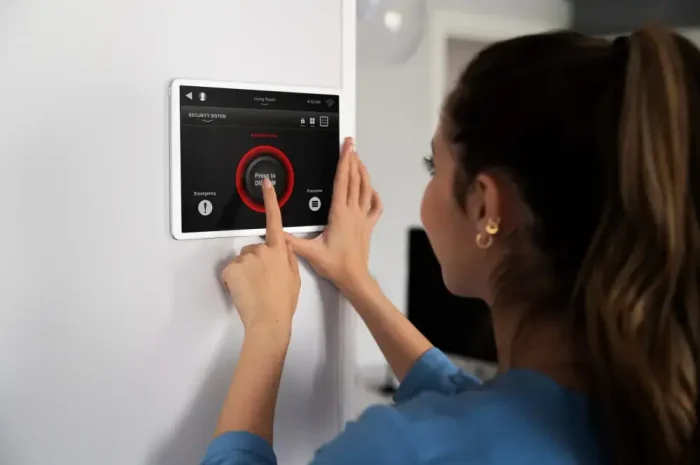
Faster Emergency Evacuation
One of the biggest advantages of biometric security systems is faster evacuation management.
In many commercial buildings, access control systems keep sensitive areas locked. During a fire emergency, these doors must open immediately. Integrated systems can automatically unlock emergency exits once the fire detection system is activated.
This reduces panic and allows people to evacuate quickly.
For example, if smoke detectors identify smoke in a server room, the building management system can instantly trigger fire alarms while unlocking connected escape routes.
This coordinated response improves safety and reduces evacuation delays.
Accurate Occupancy Tracking
During emergencies, rescue teams need accurate information about who is still inside the building.
Biometric systems maintain real-time attendance and access records. This helps safety officers identify missing individuals during a fire incident.
Instead of manually checking attendance sheets, emergency teams can quickly access digital records to know:
- Which employees entered the building
- Which floors are occupied
- Who has safely exited
- Which areas may still contain people
This information becomes extremely useful in large offices, factories, and industrial facilities.
Better Restricted Area Management
Some building zones contain hazardous materials, electrical systems, or sensitive equipment. During a fire emergency, these areas may become dangerous.
Biometric access control systems can automatically restrict entry to unsafe zones while allowing emergency responders to enter when necessary.
For example:
- Electrical control rooms
- Chemical storage units
- Data centers
- Mechanical plant rooms
This reduces risk and improves emergency coordination.
Integration With Fire Detection Systems
Modern fire detection systems are designed to work with multiple building technologies. When integrated properly, biometric security systems can support automated fire response.
A connected system may include:
- Fire alarms
- Smoke detectors
- Fire sprinkler systems
- Fire hydrant system
- Automatic sprinkler systems
- Water mist systems
- Access control systems
Once a fire is detected, all these systems can respond together.
For instance, if smoke detectors identify smoke on a particular floor, the building can:
- Activate fire alarms
- Release emergency doors
- Shut down restricted access
- Trigger fire suppression systems
- Notify safety officers
- Guide evacuation procedures
This level of automation helps reduce human error during emergencies.
Role of Biometric Systems in High-Rise Buildings
India is seeing rapid growth in high-rise commercial and residential buildings. These structures require advanced fire safety planning because evacuation becomes more complex as building height increases.
Biometric security systems help facility managers maintain better control during emergencies.
In high-rise buildings, biometric systems can:
- Monitor floor occupancy
- Support phased evacuation
- Control elevator access
- Assist emergency responders
- Maintain evacuation records
When connected with passive fire protection systems such as fire rated doors, the building gains an additional layer of safety.
Fire rated doors help slow down the spread of smoke and flames, while biometric access systems ensure controlled movement during evacuation.
Importance in Industrial Facilities
- Limiting unauthorized access
- Monitoring worker movement
- Supporting emergency roll calls
- Managing hazardous zones
- Improving compliance reporting
How Facility Managers Benefit
Facility managers are responsible for maintaining both safety and operational efficiency. Managing large buildings manually is difficult, especially during emergencies.
Biometric security systems simplify many daily operations while improving emergency readiness.
Benefits for facility managers include:
- Centralized monitoring
- Automated emergency protocols
- Better visitor management
- Faster reporting
- Improved building compliance
- Real-time occupancy visibility
Many facility managers now prefer integrated building management systems that combine biometric security with fire safety infrastructure.
This growing trend is expected to be discussed widely at upcoming industry events like the Fire & Security India Expo and other major security expos in India.
Also Read: Fire Detection and Suppression in Manufacturing Plants
The Role of Safety Officers
Safety officers play a critical role during fire emergencies. Their job is to ensure that evacuation procedures are followed properly and emergency systems function correctly.
Biometric systems help safety officers by providing:
- Live occupancy data
- Emergency access records
- Evacuation tracking
- Incident reporting support
- Access history logs
This allows emergency teams to make faster and more informed decisions during critical situations.
In large commercial facilities, safety officers often work with integrated dashboards that display information from fire alarms, smoke detectors, and access control systems in one place.
Growing Demand in India
India’s fire and security industry is growing quickly due to increasing urbanization, smart city development, and stricter safety regulations.
Businesses are now investing more in:
- Biometric security
- Fire detection systems
- Fire sprinkler systems
- Automatic sprinkler systems
- Passive fire protection
- Smart building technologies
This demand is also increasing interest in industry events such as the Fire Safety Exhibition In Mumbai and other fire and safety exhibitions across the country.
These exhibitions allow companies to explore new technologies, network with industry experts, and learn about advanced safety solutions.
The upcoming Fire Expo 2026 is also expected to showcase modern innovations in integrated fire and security systems.
Future of Integrated Fire and Security Systems
The future of building safety lies in integration and automation. Buildings are becoming more intelligent, and security systems are no longer working independently.
Artificial intelligence, cloud monitoring, IoT devices, and biometric technologies are shaping the future of emergency management.
In the coming years, biometric systems may offer:
- AI-powered threat detection
- Predictive emergency alerts
- Automated evacuation guidance
- Contactless emergency access
- Real-time emergency analytics
As smart infrastructure expands across India, integrated fire and security solutions will become a standard requirement rather than an optional feature.
Conclusion
Biometric security systems are changing the way buildings handle fire emergencies. They improve evacuation speed, enhance occupancy tracking, support emergency responders, and strengthen overall building safety.
When connected with fire alarms, smoke detectors, fire suppression systems, fire sprinkler systems, and passive fire protection systems, biometric technology becomes an important part of modern emergency management.
For facility managers, safety officers, and building owners, investing in integrated fire and security systems is becoming essential. As India continues to develop smarter commercial and residential spaces, the role of biometric security in fire safety will continue to grow.
Industry platforms like the Fire & Security India Expo 2026 are helping professionals understand how these technologies can create safer buildings and stronger emergency response systems for the future.